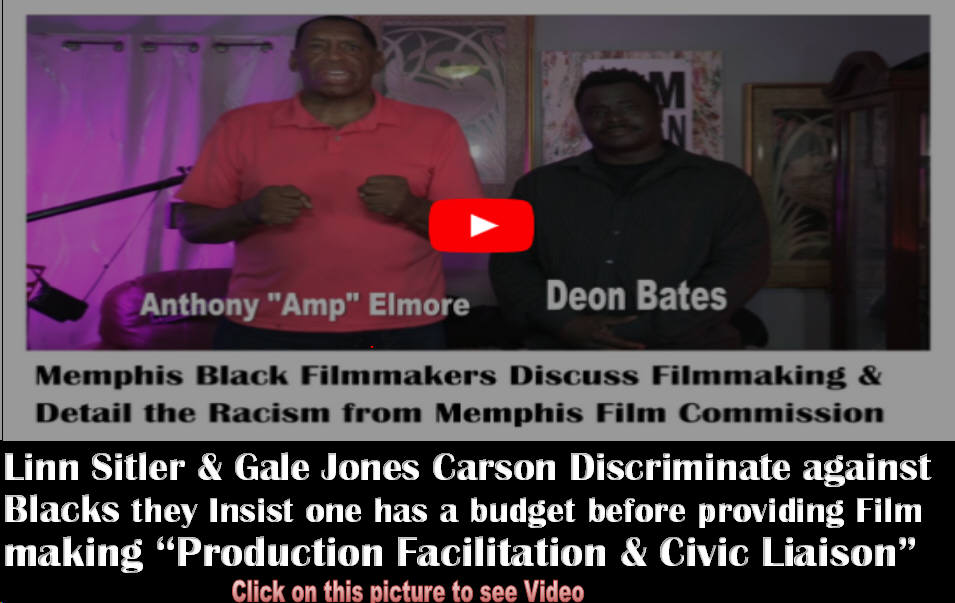

A Call for Equity, Accountability, and Inclusion in Memphis Film Policy
## 1. Structural Barriers and Cultural Bias in Public Film Funding
The Memphis and Shelby County Film Commission operates under policies that fail to serve the public equitably. Specifically, requiring a production to be fully funded before offering assistance creates an artificial and exclusionary barrier. As a taxpayer-funded public agency, the Film Commission is obligated to serve *all* citizens equally, regardless of financial status.
Instead of fostering broad public access, the Commission operates on a system of "class distinction" that excludes the majority of Memphis citizens. True film-friendly cooperation requires grassroots government support for independent productions on the ground, institutional advocacy, and an environment built on goodwill, publicity, and community buy-in rather than elitist gatekeeping.
## 2. The Erasure of Memphis Black Film History
A clear-cut example of systemic exclusion is the treatment of the 1988 independent feature film ***The Contemporary Gladiator***, shot partly in the historic African-American community of Orange Mound. The film's historical footprint—representing Memphis’s first independent 35mm theatrical feature—was systematically marginalized by former leadership, including Linn Sitler and Gale Jones Carson.
Using their official authority to promote selectively white films and white filmmakers while scrubbing Black independent milestones like *The Contemporary Gladiator* from the historical record constitutes an act of direct cultural erasure and systemic racism.
## 3. Lack of Representation and Accountability
The Memphis and Shelby County Film Commission is fundamentally out of touch with a city that boasts a majority African-American population, yet lacks authentic Black leadership and representation within the Commission itself. Neither Linn Sitler nor Gale Jones Carson were traditional filmmakers or active supporters of grassroots filmmaking development.
Furthermore, the agency's reliance on public tax subsidies to back high-profile external projects—such as *Bluff City Law* and *Young Rock*—while ignoring homegrown Black independent productions demonstrates a misallocation of public resources. Public film dollars should foster community-wide economic development, not serve as a self-publicity campaign for entrenched leadership.
## 4. Exploitation and the Reality of Memphis Film Culture
Memphis film culture continues to reflect structural disparities in how Black creative equity is valued. While films like ***Hustle & Flow*** achieved critical acclaim—directed by Craig Brewer and financed by the visionary Black filmmaker John Singleton, featuring an Academy Award-winning anthem rooted in Black culture—the underlying economic structures frequently capitalize on African-American cultural equity without reinvesting equitably back into the communities (such as Orange Mound) that birthed these narratives.
## 5. The Path Forward: Guerrilla Filmmaking and Community Empowerment
To counter this historical marginalization, independent creators like Anthony "Amp" Elmore and Deon Bates utilize **Guerrilla Filmmaking** to reclaim the narrative of African-American cinematic history in Orange Mound. Through visual documentation and community-driven storytelling, this work proves that grassroots filmmaking is a vital tool for community building, cultural diplomacy, and historical preservation.
Public agencies in Memphis and Shelby County must be held accountable to the 14th Amendment and the diverse population they represent, ensuring that the birthplace of Memphis independent filmmaking receives the institutional respect, historical markers, and financial equity it is rightfully owed.
