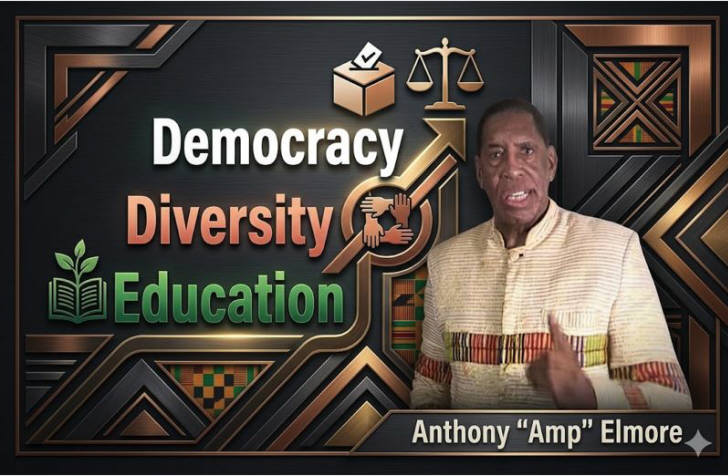

Our mission is anchored in Education, Diversity, and Democracy—the foundational pillars required to build a better America. We stand uncompromisingly against systemic white supremacy, structural racism, and internal community division, fighting tirelessly for historical truth, justice, and the complete eradication of cultural erasure in Memphis."
A Lifetime of Firsts: Pioneering History, Culture, and Democracy in Memphis
For over five decades, Anthony "Amp" Elmore has stood as a trailblazing visionary, civic leader, and cultural diplomat dedicated to uplifting Memphis, Tennessee, and preserving its true history. His life's work represents an unbroken chain of historic milestones spanning youth civic engagement, civil rights, athletic achievement, international cultural diplomacy, and digital archival preservation:
1971 — Youth Voter Registration Pioneer: As a student at Hamilton High School in Memphis, Anthony "Amp" Elmore led the very first 18-year-old voter registration drive in the state of Tennessee.
1972 — Joining the Civil Rights Movement: Demonstrating a lifelong commitment to justice, Elmore left college to join Reverend James Bevel in the ongoing fight for civil rights.
1974 — Business Trailblazer: Elmore opened the first Black-owned retail carpet store in Memphis, establishing economic independence and entrepreneurship in the community.
1979 to 1987 — Athletic and Media Pioneer:** Elmore introduced kickboxing to Memphis in 1979, brought ESPN to broadcast from Memphis in 1981, and brought the sport to Black Entertainment Television (BET) in 1986.
In 1987, he began production on the first kickboxing feature film in world film history and the first cinematic biopic of a karateka.
1990 — International Cultural Diplomacy: Elmore took his mission global, premiering his film in Nairobi, Kenya, and initiating decades of international cultural exchange. He transformed his residence at 1035 Semmes into the first All-African home in America and the "Safarihouse Education and Cultural Center," now operating as an official African Cultural Embassy.
2019 — Chronister of Black Memphis History: Recognizing a profound historical vacuum, Elmore became the first person to chronicle Black Memphis history through his landmark 2019 film,
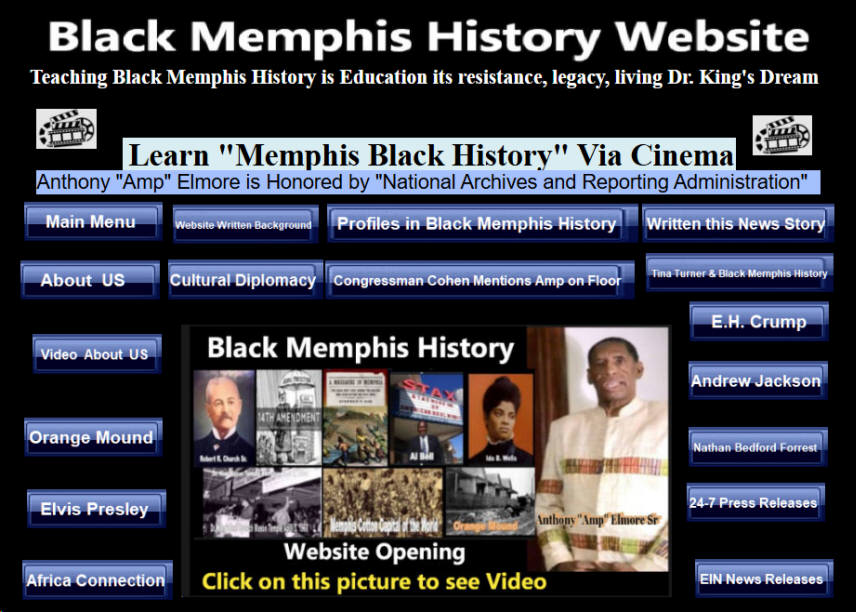
200 Years of Black Memphis History. Furthermore, he created the city's first digital Black Memphis history education and museum website.
Fighting Erasure: Challenging Institutional Gatekeeping
Despite decades of monumental contributions to the cultural, athletic, and historical fabric of Memphis, Anthony "Amp" Elmore has continually faced institutional exclusion and deliberate erasure by local gatekeepers.
In 2019, Lynn Sitler and the City of Memphis excluded Elmore's pioneering film 200 Years of Black Memphis History from being recognized as an official part of the Memphis Bicentennial Celebration. Refusing to let institutional gatekeeping silence the true history of Black Memphians.
Elmore bypassed the bureaucracy entirely: he rented out the Malco Theatre on May 22, 2019, to publicly screen the film while concurrently releasing it worldwide on YouTube.
The actions of the Memphis and Shelby County Film Commission and figures like Lynn Sitler represent a profound detriment to Memphis. By sidelining independent Black historians, filmmakers, and cultural architects who do the heavy lifting of true historical preservation, these institutional bodies engage in cultural erasure. They deprive the public of authentic educational narratives that foster diversity, democracy, and racial equity.
Preserving Truth to Build a Better America
Anthony "Amp" Elmore's digital museum and educational website stand as a fortress against historical whitewashing and local institutional neglect. By confronting white supremacy, systemic racism, and community self-destruction head-on, Elmore continues to forge a path toward true democracy. This web platform serves as a vital tool for justice—ensuring that the monumental sacrifices, triumphs, and rich history of Black Memphis are permanently preserved, celebrated, and passed down to future generations.